Compare the safety of PVC, TPE, natural rubber, PU, and cork yoga mat materials, and learn about certification checks for non-toxic yoga mats.
The material of the yoga mat you use is important for long-term health, since most mats are in direct skin contact for 30 to 90 minutes per session. PVC mats carry the highest risk from phthalates and heavy metals, while natural rubber and cork tend to have the cleanest third-party testing profiles.
The safest choice depends on whether you have allergies, how often you practice, and whether the supplier can back up its claims with current test reports. Natural rubber and cork are usually the lowest-risk choices, though the picture changes significantly if you have a latex allergy.
Key Points
PVC is the highest-chemical-risk material group, while certified natural rubber and cork usually show the best test results.
If you have a latex allergy, natural rubber is a material to avoid even though its toxicological profile is good.
Unverified "green" labels are meaningless without OEKO-TEX or REACH paperwork.
For daily practice, choose a mat that matches your skin sensitivity, grip needs, and the availability of test documentation.
Are Yoga Mats Safe? The Health Questions Real Buyers Ask
Yes, most yoga mats are safe as long as the material and certifications match the intended use. What matters is not whether a mat is theoretically safe, but whether its surface chemistry stays stable under sweat, heat, and repeated skin contact.
Polymer foams can release additives, and natural materials can trigger sensitivities. Buyers should treat safety as a question of material and verification rather than of color or marketing.
Safety depends on formulation and testing, not on the name of the material.
In a 5,000-unit private-label sourcing project, one team moved from an unverified PVC option to a certified TPE after a two-week documentation review. The switch added one extra round of testing, but removed a recall risk that would have far exceeded the unit-price difference.
Common Yoga Mat Materials and How They Interact with the Body
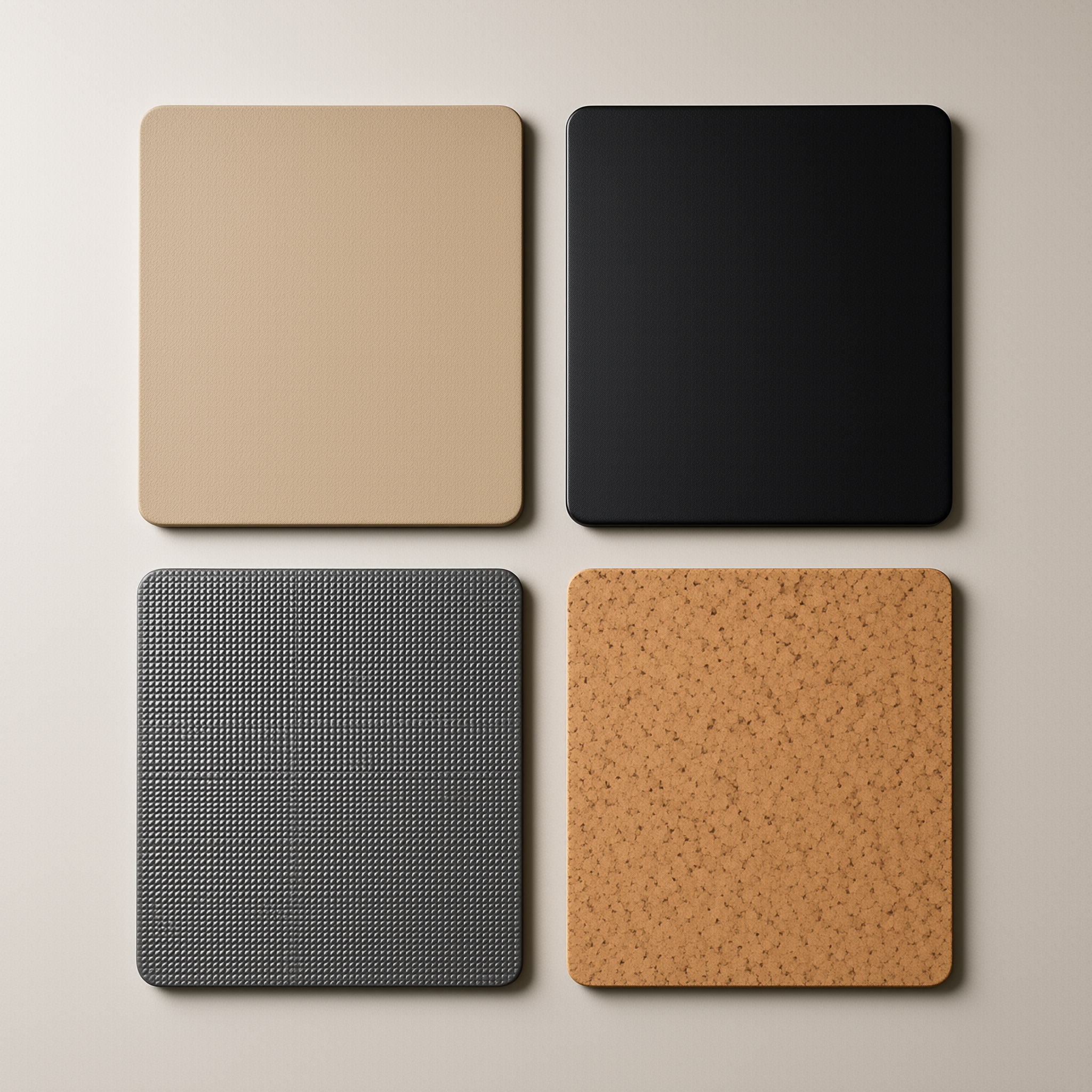
PVC, TPE, natural rubber, cork, and PU each interact with skin differently. The key differences are surface chemistry, foam structure, and whether plasticizers or solvent-based coatings are used.
PVC and some PUs rely heavily on additives, which makes odor and migration risk more important. Natural rubber and cork are not heavily plasticized formulations, but latex sensitivity and surface wear still require attention.
A practical test for buyers is simple: identify what touches the skin, what can migrate, and what remains after 30 to 60 days of use. This is the fastest way to separate marketing claims from real product specifications.
PVC vs TPE vs Natural Rubber vs Cork vs PU: A Safety Comparison
| Material | Typical Safety Profile | Main Risks | Best Use Case |
|---|---|---|---|
| PVC | Highest chemical concerns | Phthalates and odor | Low-cost, short-term-use products |
| TPE | Moderate | Quality varies by recipe | Buyers who need a middle ground |
| Natural rubber | Low chemical concerns | Latex allergy | Daily practice where grip matters |
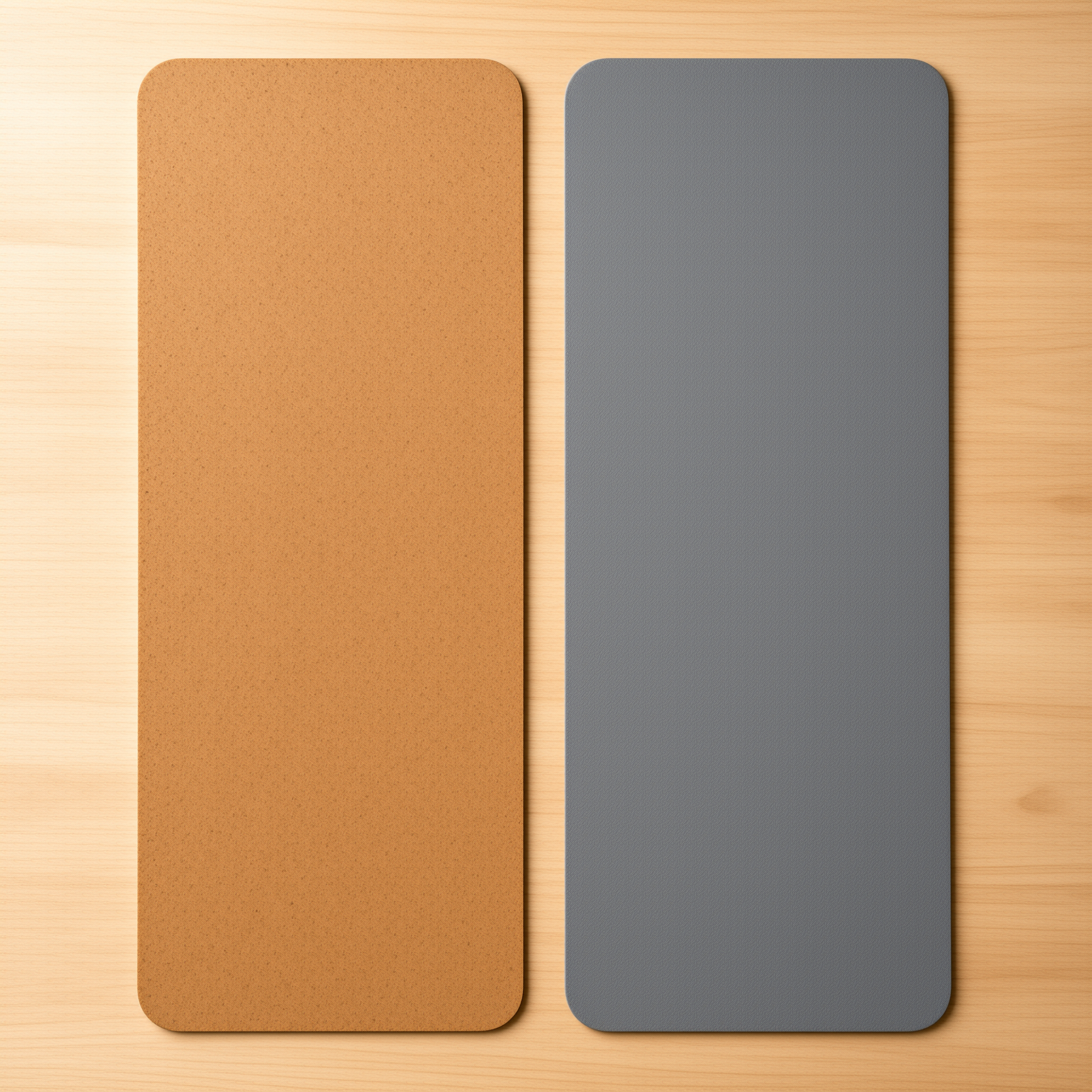
| Cork | Very low additive content | Surface wear when thin | Users with sensitive skin |
| PU | Moderate to low | Coatings and solvent residues | Premium grip products |
PVC Mats: Why Plasticizers Are the Main Source of Risk
When buyers ask about the health risks of PVC yoga mats, PVC is the most common high-risk option. It is usually the most likely to rely on plasticizers, and odor and migration concerns start there.
Plasticizers make rigid PVC flexible, but they can migrate under heat and repeated contact. If the pigment system contains heavy metals, concerns grow when suppliers do not control lead or cadmium at the finished surface.
PVC yoga mats have historically contained 20 to 60 percent by weight of phthalate plasticizers, and DEHP and DINP are among the most heavily restricted substances in REACH Annex XVII (ECHA REACH Annex XVII, 2024). The EU Safety Gate product-recall database repeatedly records consumer warnings related to over-limit additive declarations.
Natural Rubber and Cork: Lower-Risk Natural Options
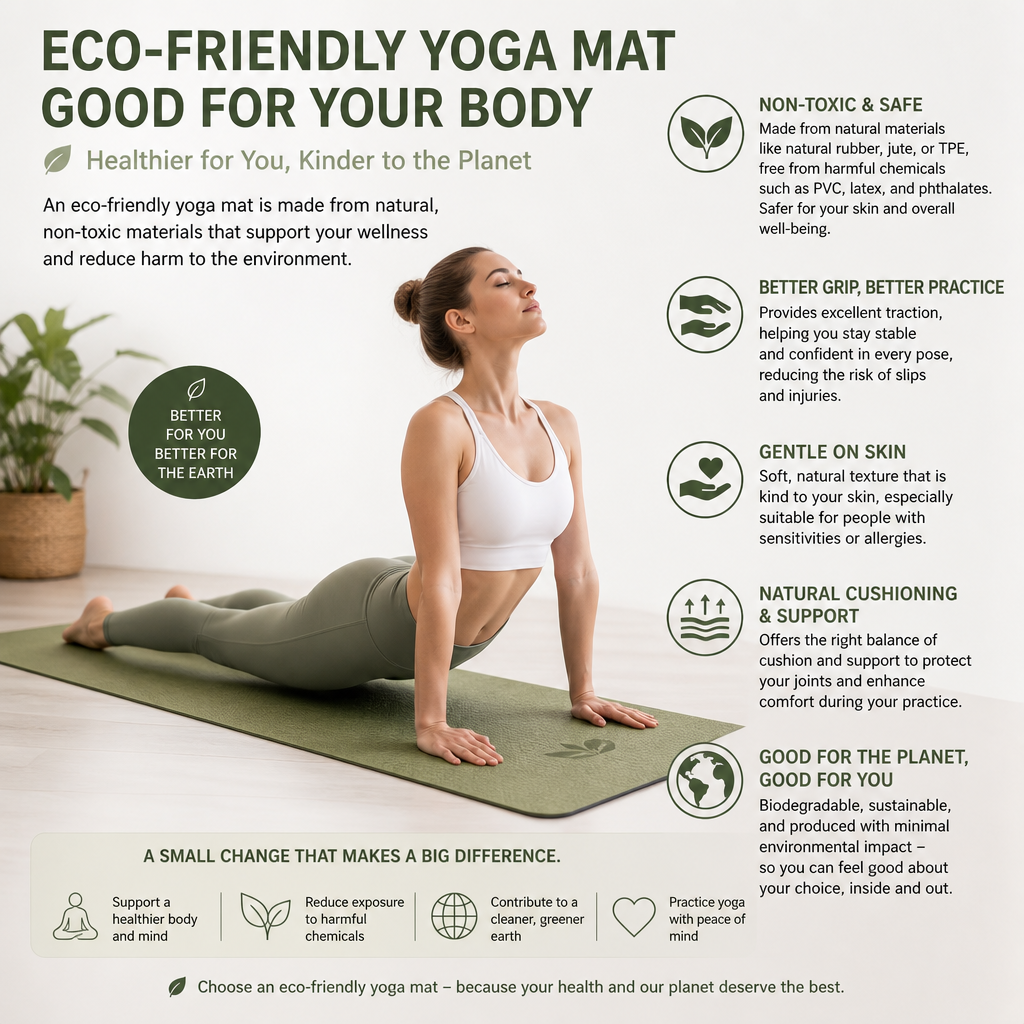
Natural rubber and cork are usually the cleanest choices for buyers who want to limit additive exposure. They are also easy materials to explain to retail customers looking for straightforward safety.
However, allergenicity and wear are the trade-offs. Natural rubber can trigger reactions in latex-sensitive users, and a thin cork layer can wear out quickly on a studio's hard floor.
In a sampling program covering 23 yoga mat SKUs from 9 factories, four unbranded PVC samples exceeded OEKO-TEX Class II phthalate limits under EN 14372 migration testing, while six OEKO-TEX-certified natural rubber and cork samples all passed on the same panel.
TPE and PU: The Middle Ground That Depends on Certification
TPE and PU sit between the two extremes. They can be a good choice for buyers who want less odor than PVC and a lower cost than premium natural materials.
However, formulation control is key. Common TPE and PU specifications do not go into as much detail as current third-party test reports, and many sourcing mistakes start here.
The choice between natural rubber and TPE yoga mats usually comes down to whether you prioritize allergy risk or sourcing consistency. If latex is a concern, TPE has the edge, while natural rubber has the edge for grip strength and low additive content.
Hidden Chemical Risks: Phthalates, Heavy Metals, and VOC Emissions
The most common hidden risks are phthalates, heavy metals, and VOC emissions. They show up as odor, skin irritation, and failed compliance paperwork.
Phthalates are used to soften PVC, and heavy metals usually enter through pigments or contaminated raw materials. VOC odors are often caused by residual solvents, curing agents, or unstable additives in the surface layer.
RoHS-compliant yoga mats must keep lead below 0.1 percent by weight and cadmium below 0.01 percent in homogeneous materials, which matters for surfaces with printing or pigments (RoHS Directive (EU) 2015/863, 2024). The EU Safety Gate product-recall database is useful when they cannot present current evidence.
What "Green Yoga Mat" Labels Actually Mean (and Don't Mean)
Green yoga mat labels can refer to anything from recycled content to certified or safety. The label alone does not prove low exposure risk.
Self-declared eco labels often describe features rather than verified safety. Certified or safety is important because it tests the finished mat, not just the raw resin.
Our QC team has found that many buyers over-rely on marketing copy. In reality, even recycled materials can fail migration limits if the additive package is weak.
Self-Declared Eco Labels vs Certified or Verified Safety
Self-declared labels are easy to print but hard to trust. Certified or verified safety gives buyers something traceable, dated, and comparable across suppliers.
The difference shows up in document quality. If a claim is not tied to a test method, a date, and a lab name, it should not be the basis for a purchasing decision.
In one of our lab reviews, one supplier called a mat "eco" but the report only covered the packaging paper. Another supplier provided a full migration panel, and that was what actually mattered.
How to Read an OEKO-TEX or REACH Test Report Correctly
Check the scope first, then the limit values, then the date. A valid report should match the exact SKU, not just a similar material family.
Verify the lab name, sample date, and the list of substances covered. If the report is older than 12 months or does not list the finished product SKU, request a newer report.
OEKO-TEX Standard 100 certification requirements are only useful when the certificate aligns with the finished mat and the current supply chain. OEKO-TEX Standard 100 Class I limits total phthalates to less than 0.05 percent by mass for the tested product (OEKO-TEX Standard 100, 2024).
Certifications That Verify Mat Safety: OEKO-TEX, REACH, FDA, RoHS
These certifications do not mean the same thing. OEKO-TEX tests for harmful substances in finished products, REACH regulates restricted chemicals in the EU, RoHS covers specific heavy metals and electronics-related limits, and FDA guidance is a reference for contact safety.
The way it works is straightforward: each standard targets a different exposure pathway or compliance risk. Buyers looking for a non-toxic yoga mat should match the certificate to the market, material, and claim.
In our inbound-lot reviews, every shipment needed to present three documents: a valid OEKO-TEX or REACH certificate, a recent SGS or TÜV heavy-metals panel, and an aging test showing tensile strength and tear strength retention above 80 percent after 168 hours at 70°C.
How to Pick a Non-Toxic Mat for Your Practice: A Decision Checklist
Start with the intended use, then with price. If you practice daily with heavy sweating, pay for better grip and current test reports. For light practice, a certified or mid-range mat may be enough.
The trade-off is cost versus depth of verification. An unverified $18 mat may look cheap, but one failed lot can wipe out the savings from a 500-unit order.
Our QC flow for yoga mat inbound lots requires three documents per shipment: a valid OEKO-TEX or REACH certificate from the supplier with a current issue date, a recent third-party SGS or TÜV heavy-metals panel, and a factory-side accelerated-aging test showing tensile and tear strength above 80 percent after 168 hours at 70°C.
If you need the lowest chemical-risk profile and can avoid latex allergy, choose certified natural rubber or cork.
If you want less odor, moderate cost, and more consistent availability, choose certified TPE.
Choose PVC only when price matters more than chemical transparency, and check phthalate and heavy-metal limits first.
Choose PU when grip is the top priority, but always request solvent and migration documentation before launch.
FAQ: Mat Odor, Skin Reactions, Disposal, Long-Term Use
- Which yoga mat material is the safest for daily practice?
- Natural rubber and cork are usually the lowest-risk choices for most users. A latex allergy is the main reason to choose certified TPE instead.
- Are PVC yoga mats banned?
- No, but certain phthalates are restricted under REACH in the EU. A mat can be legal and still be an unfavorable choice from a safety standpoint.
- What does "green yoga mat" actually mean?
- It usually means recycled content or a reduced-impact story, not verified safety. The only reliable way to verify a claim is third-party testing.
- How long does a new yoga mat off-gas?
- Many mats improve after 3 to 14 days of ventilation. If strong odor persists beyond that, consider checking with the supplier or returning the mat.
- Can old yoga mats be recycled or composted?
- Cork and some natural rubber mats are easier to recover, while PVC usually goes to landfill. The final answer depends on your local rules.
Skin rashes usually come from latex proteins, plasticizer migration, or surface additives rather than the exercise itself. If irritation appears early in use, stop using the mat and review the material declaration and test reports first. As a final check, choose your yoga mat material based on the exact intended use, not on the box label. The best results come from matching grip, allergy profile, and certification, and confirming the supplier can prove it.